
Scissor Lift Platform Height, Working Height, and Elevated Access
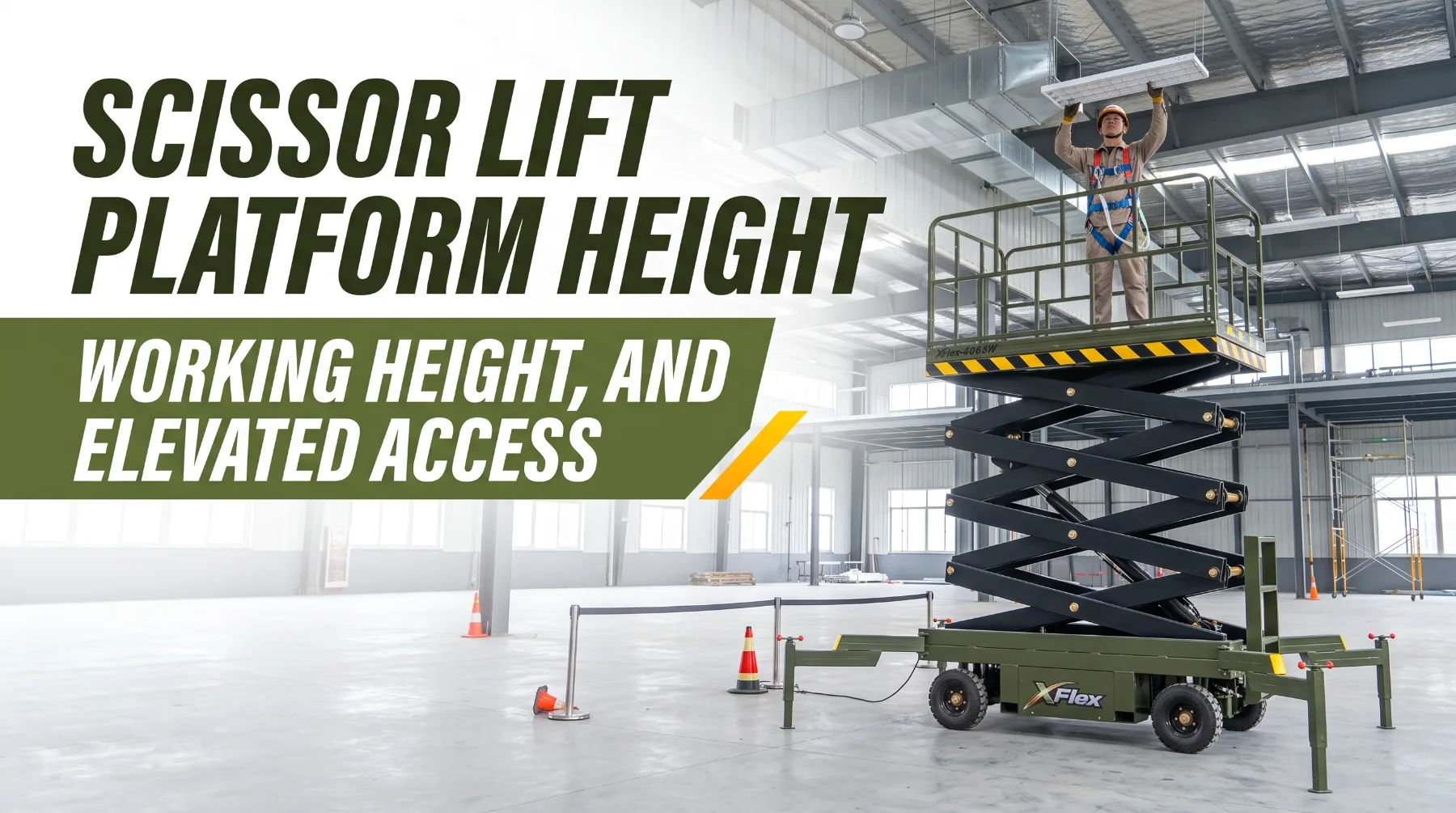
A commercial maintenance crew arrives with a punch list that reaches well above floor level. Burned-out light fixtures need replacing, exposed ceiling conduit needs attention, and an upper wall requires patching and paint. Before any tools come out, one question determines how the work will proceed: does the scissor lift reach the required elevation while giving the crew enough room to work safely? A lift rated below the needed height can leave part of the job out of reach. Oversizing the machine for the available space or floor conditions can create a different set of problems. The right match starts with two figures that sound similar but describe different measurements: platform height and working height.
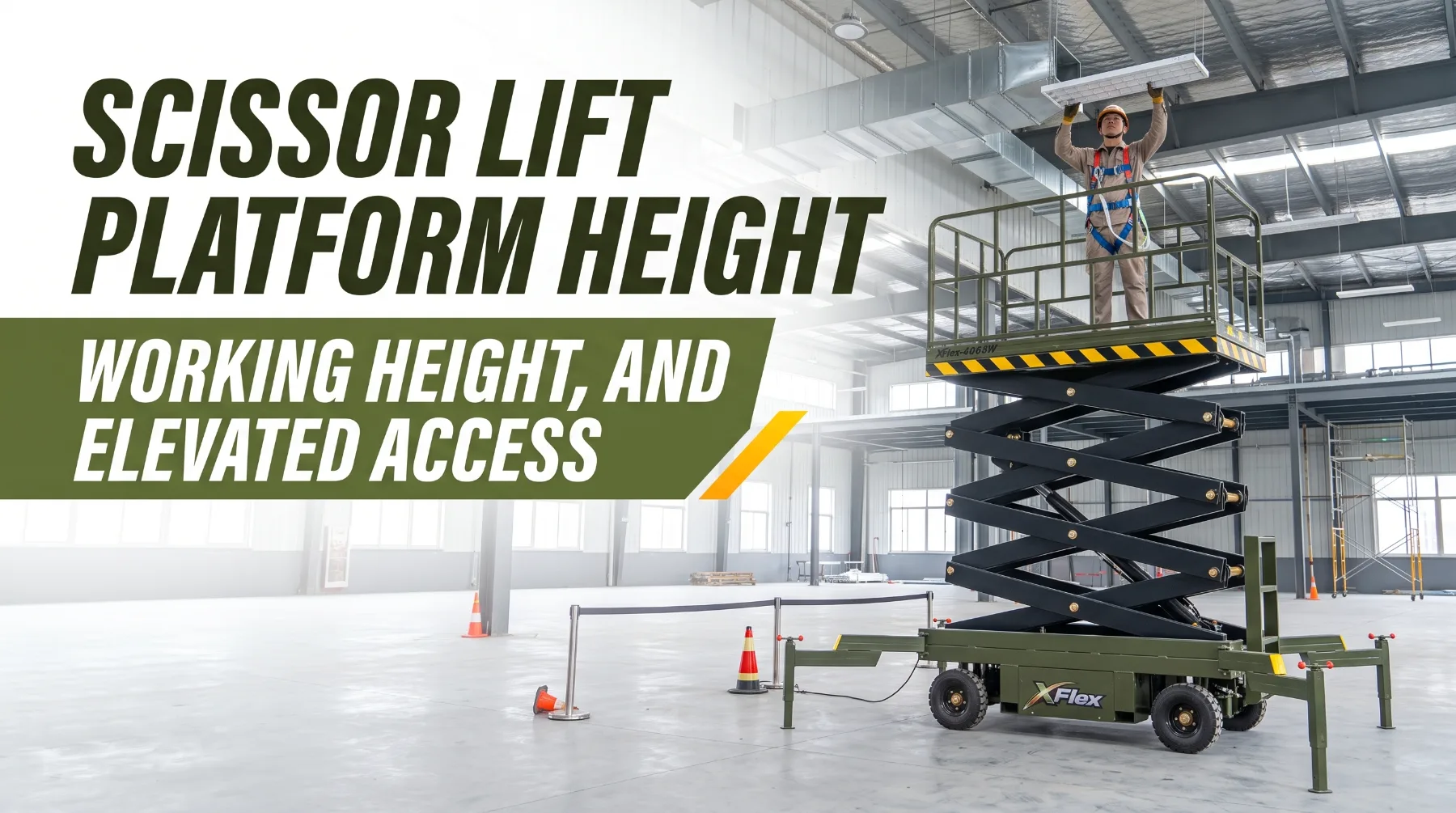
At the equipment level, those measurements serve different purposes. Platform height identifies how high the deck itself can rise, while working height estimates the highest point an operator can typically reach while standing on the platform. Confusing the two can lead to an unsuitable lift, particularly when overhead fixtures, ceilings, or elevated surfaces are involved. Knowing what each number represents gives crews a clearer basis for matching machine capability to the actual task.
Job conditions add another layer to the decision. Platform dimensions, floor strength, overhead clearance, access routes, and the number of workers or tools on the deck can all affect which lift fits the application. Once the correct elevation range is established, these factors help determine whether the machine can move into position, raise safely, and provide a practical working area throughout the job.
Understanding Platform Elevation
Platform height is the most basic measurement of a scissor lift, and it is exactly what it sounds like: the vertical distance from the ground to the surface of the raised work platform at full extension. It tells you how high the deck where workers stand will actually rise. If a lift lists a platform height of 19 feet, the floor of that platform reaches 19 feet off the ground when the scissors are fully extended. This is the number manufacturers put front and center on a spec sheet, because it defines the machine’s core capability.
The reason it appears so prominently is that platform height anchors every other calculation. It sets the baseline for how high the work surface climbs, and it is measured under rated conditions on a firm, level surface. Two lifts can look nearly identical yet carry very different platform heights, and that gap decides which jobs each can handle. When you read a spec sheet, treat platform height as the foundation figure, but remember it describes where the deck stops, not where the worker’s hands can reach.
Key takeaway: Platform height is the vertical distance from the ground to the raised platform deck, and it serves as the baseline figure that defines what a scissor lift can physically reach.
Estimating Overall Working Height
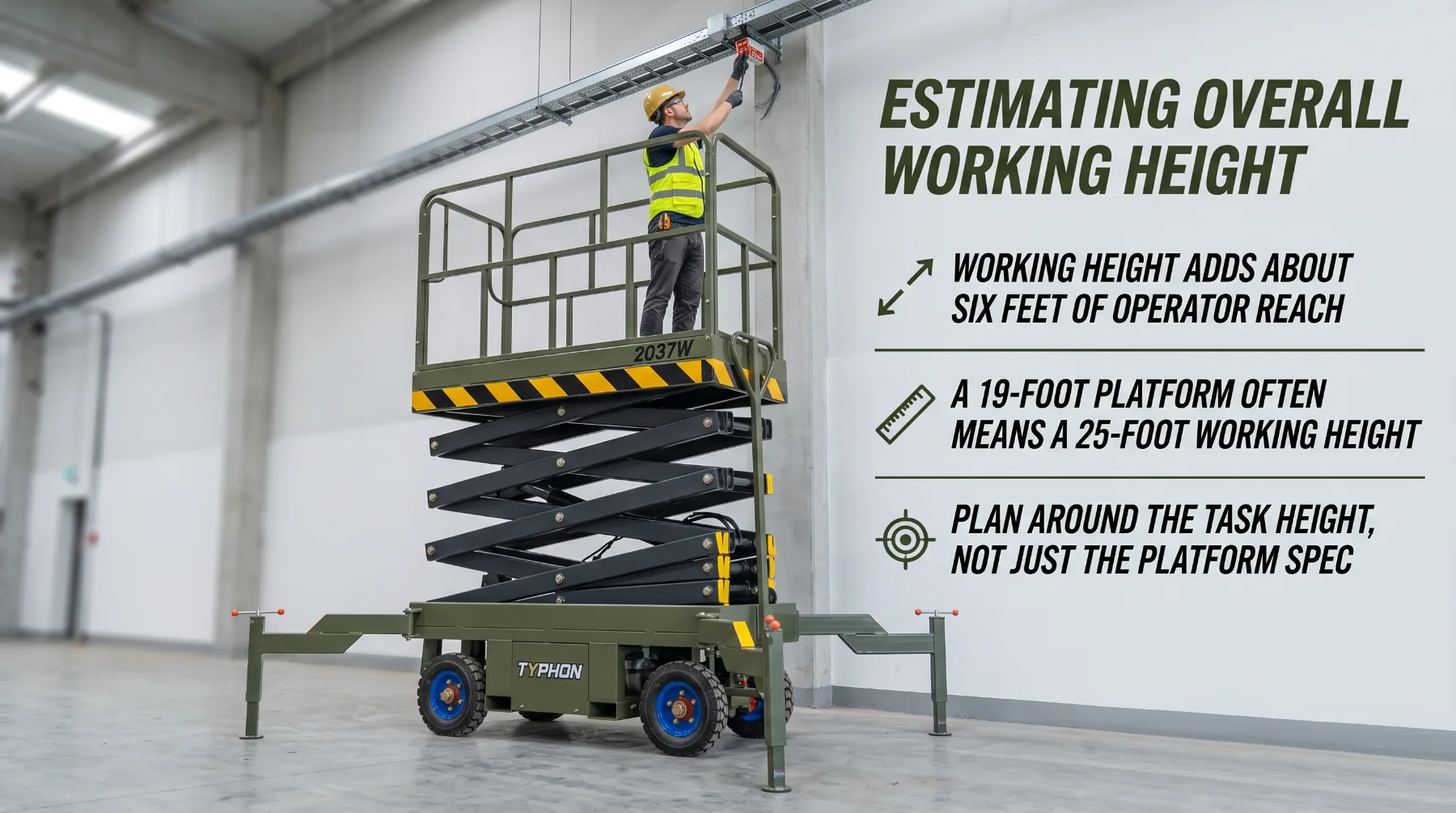
Working height is the more practical number for planning a job, because it accounts for the people, not just the machine. It typically equals the platform height plus the operator’s reasonable reach above the deck, which the industry usually estimates at around six feet. A lift with a 19-foot platform height, for example, is commonly listed with a working height near 25 feet, reflecting that a worker standing on that deck can reach roughly six feet higher to touch a ceiling, fixture, or wall surface.
This distinction matters because tasks are defined by where the work is, not where the worker stands. When you need to service a fixture 24 feet up, you are really asking whether the crew can reach 24 feet, and that is a working-height question. A higher platform elevation naturally extends access to ceilings, overhead lighting, signage, ductwork, and building surfaces. Planning around working height keeps you from buying or renting a lift that technically climbs high enough on paper but leaves the crew stretching or, worse, climbing onto guardrails to close the final gap.
Key takeaway: Working height equals platform height plus roughly six feet of operator reach, making it the more realistic figure for matching a lift to where the actual work sits.
Considering Platform Size
Height gets the attention, but platform size shapes how well the crew actually works once they are up there. Platform dimensions determine how many workers fit, how freely they can move, and how much material and how many tools they can bring up with them. A cramped deck forces workers to reposition the machine constantly or make repeated trips down for supplies, both of which slow the job and add risk. A generous platform lets a crew stage what they need and stay productive at height.
The right size depends on the task. Glass installation and panel work often require room for two workers to handle large, awkward pieces safely. Electrical maintenance, painting, and overhead construction each benefit from space to lay out tools, hold materials, and shift stance without crowding. Many lifts also offer extending deck sections that add reach for spot work without moving the whole machine. Thinking through what the crew carries and how they move, not just how high they go, keeps the platform from becoming the bottleneck on an otherwise well-planned job.
Key takeaway: Platform size determines how many workers, tools, and materials fit on the deck, so match the dimensions to the task to keep the crew productive and safe at height.
Checking Ground Conditions
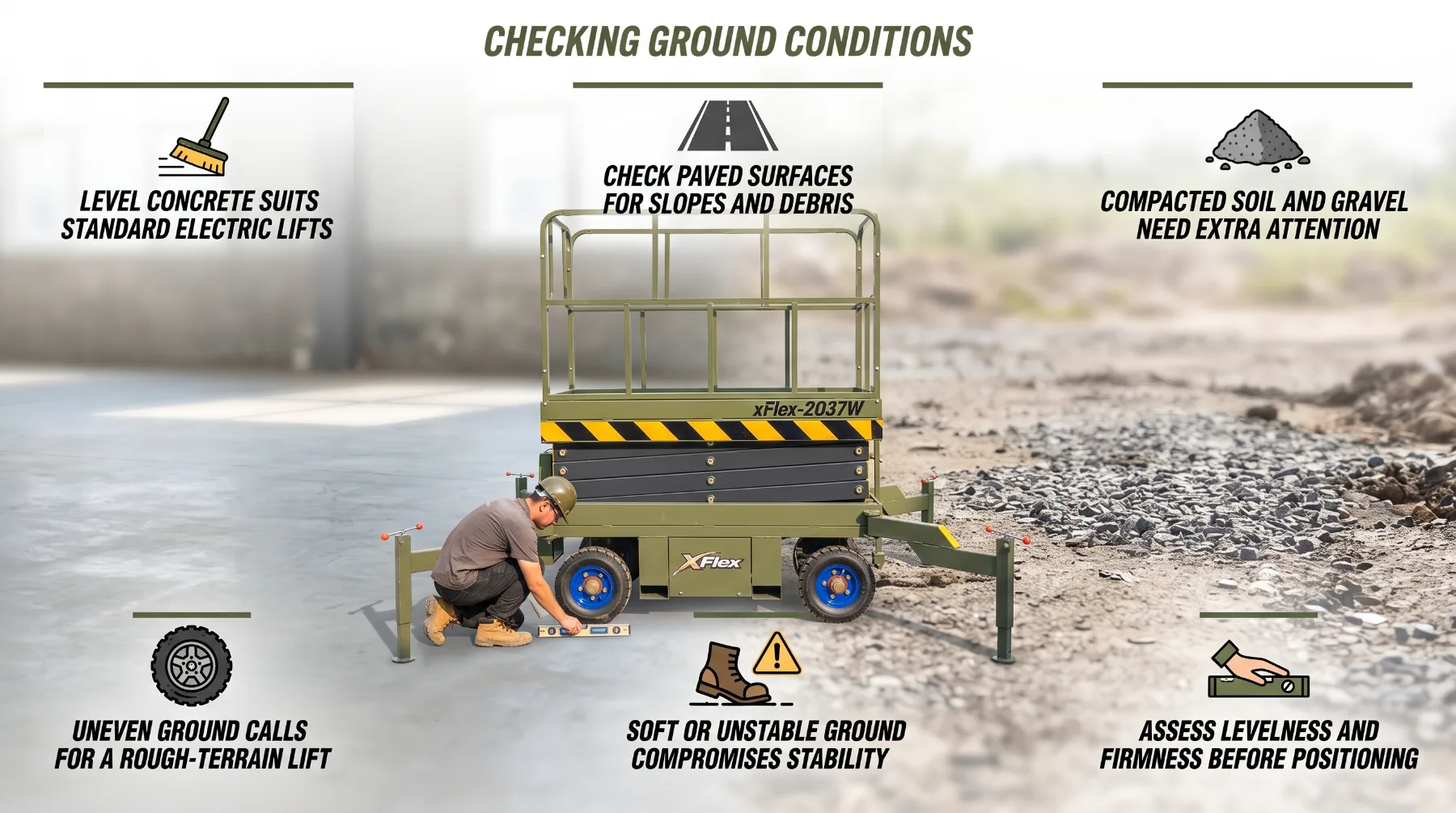
A scissor lift is only as stable as the surface beneath it, so ground conditions deserve as much attention as working height. Indoor jobs usually provide smooth, level floors that suit standard electric lifts, while outdoor projects can involve slopes, debris, gravel, compacted soil, or uneven terrain. Matching the lift to the surface helps maintain stability as the platform rises and prevents using equipment in conditions it was not designed to handle.
- Smooth indoor floors: Level concrete floors provide a stable surface for standard electric scissor lifts and allow compact machines to operate effectively at working height.
- Paved outdoor surfaces: Concrete and paved lots can provide firm support, but operators still need to check for slopes, debris, surface damage, and other conditions that can affect stability.
- Compacted soil and gravel: These surfaces require more attention because firmness and levelness can vary across the work area. A lift designed for outdoor terrain is better suited to these conditions.
- Uneven terrain: Rough or irregular ground calls for a rough-terrain scissor lift equipped for outdoor operation. Larger tires, greater ground clearance, and appropriate stability features help the machine handle less predictable surfaces.
- Soft or unstable ground: Standard indoor electric lifts are not intended for rough or soft ground. Using them on unsuitable surfaces can compromise stability, particularly when the platform is elevated.
- Surface assessment: Check the ground before positioning the machine, including levelness, firmness, debris, slopes, and changing conditions across the work area. The surface helps determine which type of scissor lift is appropriate for the job.
Key takeaway: Ground conditions determine which lift is safe to use, with smooth indoor floors suiting electric lifts and uneven or unpaved outdoor surfaces requiring rough-terrain models built for stability.
Using Elevation Safely
Choosing the right lift is only half the job; using it safely at height is the other half. Every scissor lift comes with manufacturer operating limits for platform height, load capacity, wind conditions, and surface stability, and those limits are not suggestions. Overloading the platform, exceeding the rated height on an extension, or working outdoors in high wind all compromise stability in ways that can lead to a tip-over. Knowing and respecting those numbers is the foundation of safe elevated work.
Setup discipline protects the crew before the platform ever rises. Position the lift correctly on firm, level ground, engage any stabilizing features, and confirm the surroundings are clear before elevating. Once up, tools and materials should be secured so nothing slides, rolls, or falls, both to protect people below and to keep weight from shifting unexpectedly on the deck. Workers should stay inside the guardrails with feet on the platform floor, never climbing on rails to gain height. These habits are simple, but together they are what keep a routine job at height from becoming an incident.
Key takeaway: Safe elevated work depends on respecting manufacturer limits for height, load, and wind, positioning the lift correctly before raising, and securing tools and materials on the platform.
Conclusion
Platform height and working height represent different measurements that should be evaluated together when selecting an electric scissor lift. Platform height indicates the vertical distance from the ground to the platform deck, while working height represents the approximate maximum height an operator can reach while standing on the elevated platform. Working height is therefore more relevant when matching the lift to the actual elevation of the task, although the exact reach allowance depends on the operator and manufacturer specifications. Machine selection should also consider lift type, platform capacity, platform dimensions, ground conditions, indoor or outdoor operation, maximum working height, and available operating space. Compact electric models are generally suited to controlled indoor or finished-surface applications, while rough-terrain scissor lifts are designed for outdoor surfaces and conditions within their rated limits. Platform capacity must account for workers, tools, and materials, while slope, surface stability, wind, and other environmental factors can affect safe operation at elevation. Operators should remain within the manufacturer’s specified height, load, slope, wind, and configuration limits and verify the machine’s working envelope before use. Evaluating platform height together with working height, payload, terrain, and operating conditions provides a more accurate basis for selecting a scissor lift for the required elevated access task.
Frequently Asked Questions
What is scissor lift platform height?
Platform height is the vertical distance from the ground to the platform floor when the lift is fully raised under rated conditions. For example, a 19-foot platform height means the deck reaches 19 feet above the ground. This shows where workers stand, so it should be considered alongside working height when planning elevated tasks.
What does working height mean?
Working height estimates how high a worker can reach from the platform and is generally the platform height plus about 6 feet of practical overhead reach. A 19-foot platform height would therefore provide roughly 25 feet of working height. This figure helps determine whether workers can comfortably reach the actual work area without unsafe stretching or climbing.
Is platform height the same as working height?
No. Platform height measures the deck’s height above the ground, while working height includes the worker’s practical overhead reach, usually around 6 feet more. When comparing lifts, check which height a specification refers to and match the working height to the actual task height.
What affects the required scissor lift height?
The required height depends on the work surface, ceiling height, platform size, task, tools, and needed overhead reach. Ground conditions also matter, since uneven or unpaved sites may require a rough-terrain model. Check platform height, working height, load capacity, and operating limits together to select a suitable lift.